
Display products around what the customer wants to do
Group products around an occasion or shopping task and make alternatives easy to compare.
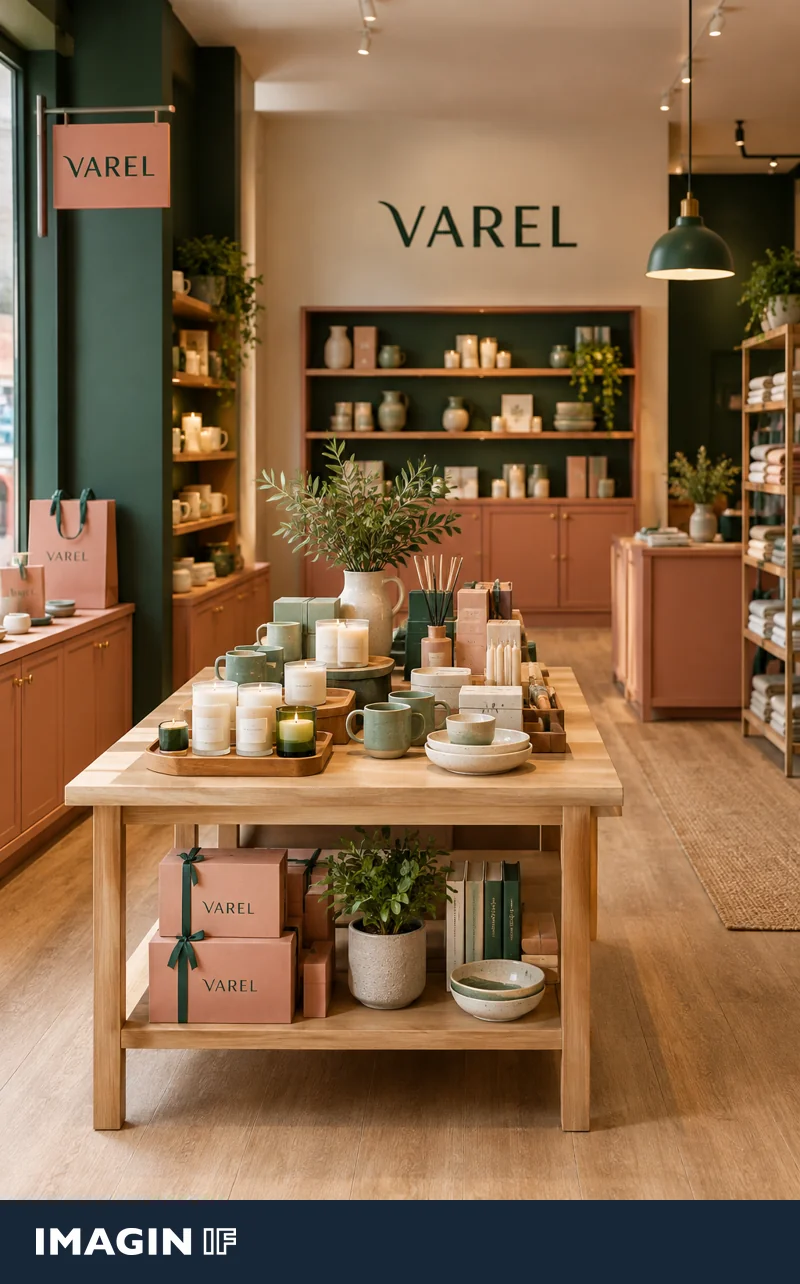
Pick a request you hear often, such as “I need something to wear to a wedding.” Walk through your shop and collect the items that together answer it. You will quickly see which things are too far apart.
Start with a question customers really ask
Listen near the till or on the shop floor for the words people use. “I need a gift for someone who has just moved” gives you more to work with than “I’m looking for something for the house.” Build a small group of items that fits the occasion and a budget. Keep the usual departments clear so someone looking for one item can still find it where they expect.
Make the alternatives easy to compare
Put one suggestion in the centre and place alternatives alongside it. A florist might set out a small bouquet for someone choosing quickly, a larger version and a vase that fits. The VAREL concept brings together gifts and packaging. Give shoppers a price or one important difference at the point where they compare. A group of gifts at different prices works best when the price points are easy to see.
Build one display around a complete outfit. Keep matching shoes and accessories close by. Make it easy to compare alternatives, such as two jacket styles with the same trousers. The same idea works beyond fashion. A florist could show a bouquet, a suitable vase and a card together for someone choosing a gift.
See how the grouping works on the shop floor
Take a photo on day one and use receipts to see which products customers buy together if your till system allows it. Also watch what people pick up and what they ask. A missing size, unclear price or accessory on the other side of the shop can break the connection. Change one element at a time and take another photo. If you want to repeat the display elsewhere, write down what makes the group recognisable and which items can rotate.
Watch for a few days to see which products people combine and where they still ask for help. Use what you learn to improve the display.
Where should you put the product group?
Choose a spot where the question arises. A gift shopper might spot the group near the entrance. Someone who has picked a coat might discover the matching scarves beside the rail or near the mirror. Try the same group in one of those positions without also changing prices or products. Record which spot generates more questions or combinations. Consider the work for your team too. A display loses its usefulness on busy days if it is often empty or takes too long to replenish.