
Refresh your shopfront: see your shop as a passer-by
Check whether passers-by can read your name, understand what you sell and spot the door.
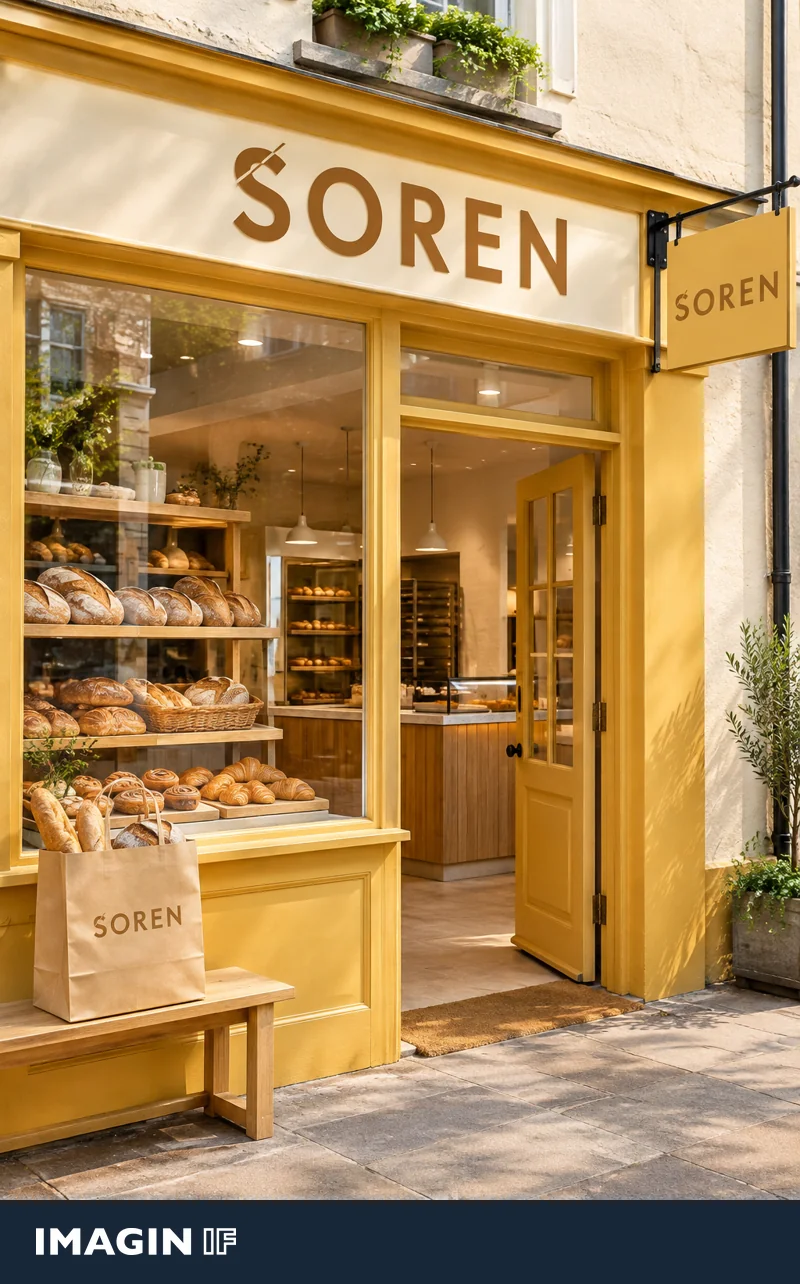
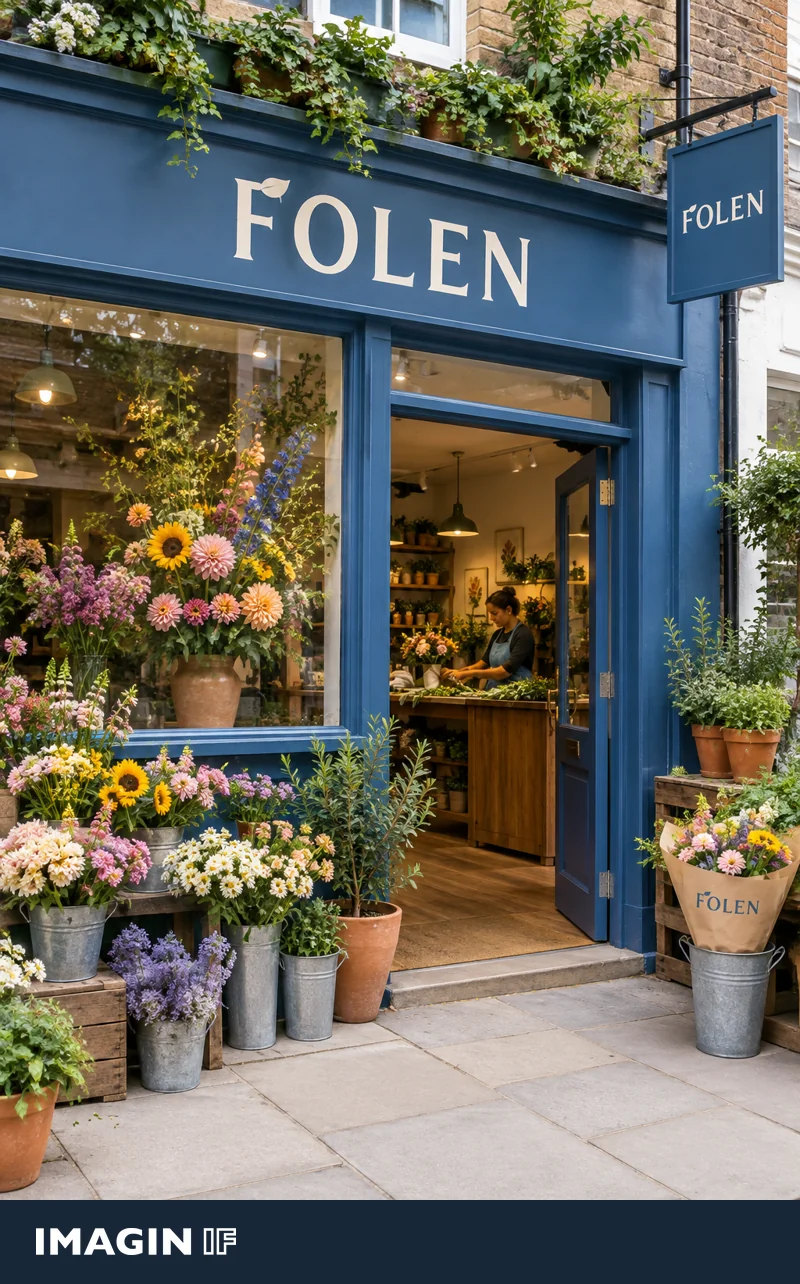
Stand on the pavement where most of your customers approach. Look at the shop as if you were seeing it for the first time. Can you read its name? Can you tell at a glance what it sells? Is the entrance obvious?
Where does a passer-by look?
Start with the street. In a narrow street many people see the frontage from the side, while a shop across an open square can be visible from much farther away. Take three photos, one from each side and one from directly opposite. For each photo, note when the name, the offer and the entrance become recognisable. With a recessed storefront, the problem may begin before anyone sees the window. In that case, make the shop visible on approach first.
Choose a change that suits what you sell
A bakery can show what is inside with a small group of loaves and a clear name above the window. In the SOREN concept, the window communicates the offer beside the recessed entrance. The FOLEN florist tells a different story through both the bouquets and the view of the workbench. You can see where the flowers are arranged. Decide what your own customers should understand from the street, then use the colour, display and entrance to make that message easier to read.
Take a photo from that angle and compare three changes on the same frontage. First, give the name a quieter background. Next, choose one part of your range to lead the window display. Finally, see whether the door is easier to spot when you remove stickers and put the opening hours beside it. That can help when the door is set back from the pavement.
Compare ideas on the same photograph
Keep windows, doors and structural features in place for the first comparison. Make one version with different lettering, one with a new display and one with a clearer doorway. Shrink the images on your phone until they resemble the distant view. Ask two people where they would enter and what they expect to buy. If both point to the wrong door, you have a specific reason to work on the entrance. Repeat the check after closing if you want the shop to stay visible in the evening.
Start with whichever of the three questions is hardest to answer from the street. That gives you a clear way to compare the options for your own shop.
What can you change without rebuilding the whole frontage?
Start with parts you can test individually, such as the background behind the name, how many products sit behind the glass or where you put opening hours. A reversible trial shows which change deserves more work. If the aim is to make the entrance easier to notice, test the doorway with the existing colour and stock still in place. If the aim is to show that you make things to order, display a finished example alongside one recognisable step in how you make it. Give the shopper a clear reason to come in.